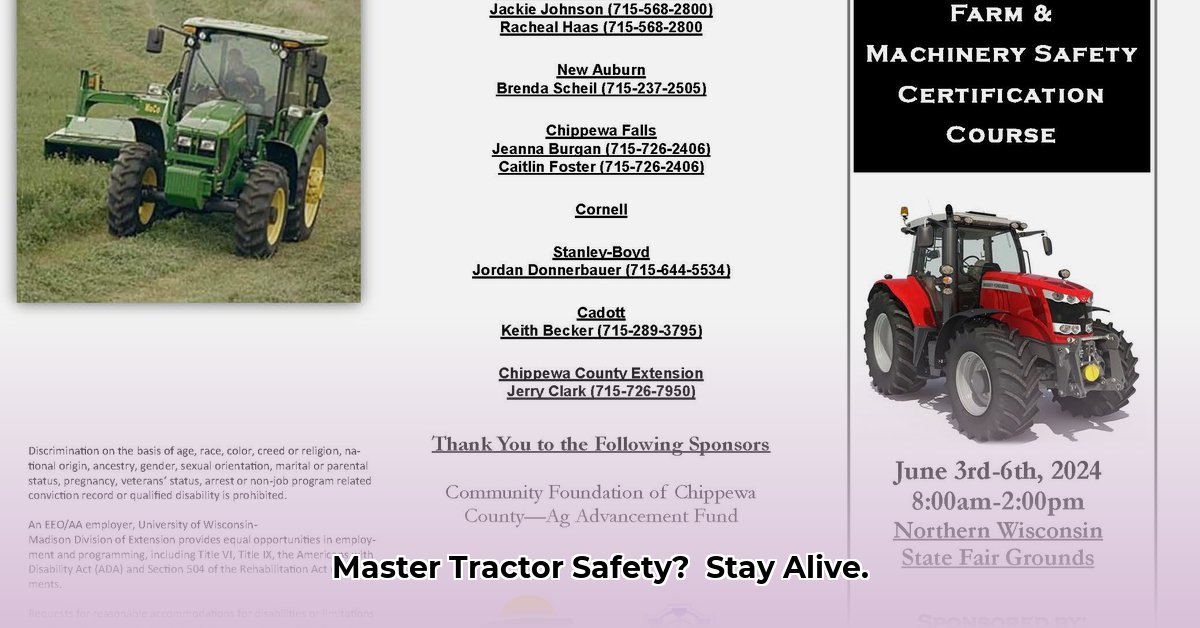
Tractor Safety Training: Protecting Yourself and Others
Farming demands skill and vigilance. Tractors, while essential tools, are powerful machines capable of inflicting serious injury. Accidents are preventable, and selecting the right tractor safety course is the first step toward a safer working environment. This guide compares two popular training options—the National Safe Tractor and Machinery Operation Program (NSTMOP) and online courses like those offered by Hard Hat Training—to help you make an informed decision. We'll also cover essential safety practices and regulations. For additional resources on safe machinery operation, check out this helpful resource.
Choosing the Right Tractor Safety Training: Youth vs. Adult
The ideal safety course depends largely on your age and experience. Youth programs, often targeting 14-15 year olds, frequently adhere to Department of Labor (DOL) regulations dating back to 1969. NSTMOP, for example, typically provides extensive, in-person training—often 24 hours or more—combining classroom instruction with hands-on experience. These programs are frequently facilitated through high schools or agricultural extension services.
Adult learners and those outside the youth program age range often find online courses, such as those provided by Hard Hat Training, more convenient. These platforms offer self-paced learning, completing training in as little as 90-120 minutes. While this offers flexibility, the significant difference in training time is crucial to consider.
Comparing Training Options: NSTMOP and Online Courses
This table highlights key differences:
| Feature | NSTMOP (National Safe Tractor and Machinery Operation Program) | Online Courses (e.g., Hard Hat Training) |
|---|---|---|
| Target Audience | Primarily teenagers (14-15 years old), focusing on DOL compliance. | Diverse age groups and experience levels. |
| Instruction Method | In-person, instructor-led. | Online, self-paced. |
| Duration | Approximately 24+ hours. | Typically 90-120 minutes. |
| Certification | Often leads to nationally recognized DOL safety certification. | Certification varies; acceptance may differ. |
| Cost | Often subsidized or partially covered by schools or agricultural extension services. | Participants generally cover the full cost. |
Key Safety Topics in Tractor Safety Courses
Regardless of the chosen program, core safety elements remain consistent:
- Pre-Operation Inspections: Thoroughly checking the tractor before starting, examining components for functionality and safety.
- Safe Operating Procedures: Maintaining safe speeds according to terrain and weather; assuring clear visibility.
- Hazard Recognition and Mitigation: Identifying and mitigating risks such as rollovers (especially on slopes), entanglement with moving parts (like PTO shafts), and collisions.
- Safety Equipment Usage: Proper use and maintenance of seatbelts, Roll-Over Protective Structures (ROPS), and other protective gear.
- Emergency Response: Knowing how to react to accidents or equipment malfunctions, including emergency shut-off procedures and contacting emergency services.
Selecting the Right Tractor Safety Course
Several factors should guide your decision:
- Experience Level: Are you a novice or experienced operator seeking a refresher? Some courses cater to various skill sets.
- Age: Youth-specific programs often align with age-related regulatory compliance.
- Learning Style: Do you prefer in-person interaction or the flexibility of online learning?
- Cost: Consider all expenses, including travel and materials.
- Certification Requirements: Certain jobs or insurance may mandate specific certifications.
Online vs. In-Person Training: A Detailed Comparison
Let's analyze the advantages and disadvantages:
| Feature | Online Training | In-Person Training |
|---|---|---|
| Flexibility | High; self-paced learning. | Lower; fixed schedule. |
| Cost | Generally lower. | Potentially higher, including travel. |
| Hands-on Training | Limited; simulation-based. | Extensive; direct tractor operation. |
| Interaction | Limited; less direct interaction. | High; instructor and peer interaction. |
| Accessibility | Accessible globally with internet access. | Limited by location and course availability. |
Essential Elements of Effective Tractor Safety Training
Irrespective of format, effective training must include:
- Pre-operation checks: A thorough examination of the tractor before use.
- Safe operation techniques: Proper starting, stopping, maneuvering, and attachment use.
- Hazard identification and avoidance: Recognizing and avoiding potential dangers.
- Emergency procedures: Knowing how to react safely to accidents or malfunctions.
- OSHA standards and regulations: Understanding and adhering to safety regulations.
Key Takeaways:
- Tractor safety training is paramount for accident prevention.
- Both online and in-person training offer advantages and disadvantages; the best option depends on individual needs and circumstances.
- Hands-on experience is crucial regardless of format.
- Adherence to OSHA standards and state regulations is non-negotiable. Prioritizing safety is paramount to safe and effective operation.